|
 |
Home Page >
Textual pathway > Tragedies > Adelchi: plot
 Adelchi: plot Adelchi: plot
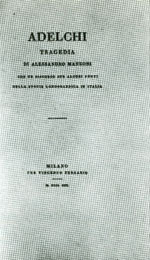 The historical subject-matter of the Adelchi is the downfall of the Longobards in Italy, between 772 and 774, defeated by the Franks. Like Il Conte di Carmagnola, the Adelchi is divided into five acts, but has two Cori (choruses) and, besides its greater complexity in themes and characters, offers a richer and more dynamic plot. After being repudiated by Carlo (the future Charlemagne), Ermengarda, the daughter of Desiderio, King of the Longobards, returns to Pavia to her father and brother Adelchi. The latter welcomes her warmly and tries in vain to dissuade their father from taking revenge, exhorting him to restore lands seized from Pope Hadrian. Carlo sends a messenger with the order that the lands are to be restored, but Desiderio refuses and war is declared. Some Longobard dukes, however, have treason in mind, and gather to conspire at the home of Svarto, an obscure soldier in search of power (Act I). Carlo descends as far as Adelchi’s stronghold in the Susa Valley. Bishop Leone sends Martino, the deacon of Ravenna, to Carlo, having discovered an unknown pass during a long journey across the Alps that will enable Carlo and his men to sidestep the Longobard stronghold (Act II). Adelchi’s attempts to resist the unexpected attack of the Franks prove futile. In his tent, Carlo rewards the traitor Svarto, although in his heart he despises him, while he praises the heroic and fatally wounded Anfrido, Adelchi’s horseman. The Longobards prepare to defend the kingdom’s main cities (Act III, with the first Coro). At the convent in Brescia where she had taken refuge, Ermengarda learns from her sister Ansberga that her beloved Carlo has remarried; she then falls ill, becomes delirious and dies. The traitor dukes help the Frankish troops to enter Pavia, capital of the Longobard kingdom (Act IV, with the second Coro). Adelchi continues to fight in Verona, but Desiderio is captured. The news arrives that Verona has fallen. The mortally wounded Adelchi is brought before Carlo and Desiderio. After speaking noble words of sorrow, he dies a Christian death (Act V). The historical subject-matter of the Adelchi is the downfall of the Longobards in Italy, between 772 and 774, defeated by the Franks. Like Il Conte di Carmagnola, the Adelchi is divided into five acts, but has two Cori (choruses) and, besides its greater complexity in themes and characters, offers a richer and more dynamic plot. After being repudiated by Carlo (the future Charlemagne), Ermengarda, the daughter of Desiderio, King of the Longobards, returns to Pavia to her father and brother Adelchi. The latter welcomes her warmly and tries in vain to dissuade their father from taking revenge, exhorting him to restore lands seized from Pope Hadrian. Carlo sends a messenger with the order that the lands are to be restored, but Desiderio refuses and war is declared. Some Longobard dukes, however, have treason in mind, and gather to conspire at the home of Svarto, an obscure soldier in search of power (Act I). Carlo descends as far as Adelchi’s stronghold in the Susa Valley. Bishop Leone sends Martino, the deacon of Ravenna, to Carlo, having discovered an unknown pass during a long journey across the Alps that will enable Carlo and his men to sidestep the Longobard stronghold (Act II). Adelchi’s attempts to resist the unexpected attack of the Franks prove futile. In his tent, Carlo rewards the traitor Svarto, although in his heart he despises him, while he praises the heroic and fatally wounded Anfrido, Adelchi’s horseman. The Longobards prepare to defend the kingdom’s main cities (Act III, with the first Coro). At the convent in Brescia where she had taken refuge, Ermengarda learns from her sister Ansberga that her beloved Carlo has remarried; she then falls ill, becomes delirious and dies. The traitor dukes help the Frankish troops to enter Pavia, capital of the Longobard kingdom (Act IV, with the second Coro). Adelchi continues to fight in Verona, but Desiderio is captured. The news arrives that Verona has fallen. The mortally wounded Adelchi is brought before Carlo and Desiderio. After speaking noble words of sorrow, he dies a Christian death (Act V).
 
|
|
 |
 |
|
|
|
|
|
|
     |