 The end of the idyll
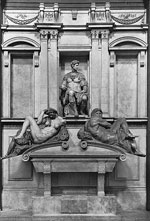 Repeatedly, during the course of the work, starting with the letter of dedication to Miguel da Silva, Castiglione points out that, when the Libro del Cortegiano reached its readers, many of the characters of the court of Guidubaldo and Elisabetta, protagonists of the dialogues, would be dead. They emerge from the pages of the text as ghosts, heroic heroes of the past. The first to die was the Duke Guidubaldo di Montefeltro, in April 1508, shortly after the period in which the fictitious conversations took place; the last to disappear was the Duchess Elisabetta Gonzaga, who died on 28th January 1526, when the work as about to be published. In between these two extremes, Baldassarre, with obsessive attention to detail, recorded a sequence of bereavements: Vincenzo Calmeta (1508) and Gaspare Pallavicino (1511), Cesare Gonzaga (1512) and Giuliano de’ Medici (1516), Bernardo Dovizi da Bibbiena (1520) and Ottaviano Fregoso (1524). Of those happy times and that splendid court, hardly anyone was left: a cruel and tragic destiny had unleashed itself on the witnesses and protagonists of such an era, furthermore subjected to the unjust violence perpetrated against them by Leone X and Lorenzo de’ Medici.
The lugubrious note that sounds in the text, is not, nonetheless, there as an end to itself, and neither us it intended to simply transmit the desperation, the melancholy resignation of the author. Castiglione, even in his sadness, did not give in to discomfort, to regrets, to retreating. The realisation of the brusque and sudden end of the idyll serves to transmit a message that is still positive, projected into the future: the clear successes of his friends, in the rushed brevity of their existences, left an example that would last and be valued, even after their death. The court of Guidubaldo, no longer in existence, is elevated to the rank of the perfect example, so that one may perceive its permanently instructive value, and that the practical virtues of its protagonists may be replicated successfully in future.





